When someone hears they or their loved one may need a liver transplant, one of the first questions that comes up is — “What are the actual chances of success?” It’s a completely natural worry. The good news is that modern liver transplantation has made huge progress, and the latest data from India is genuinely encouraging.
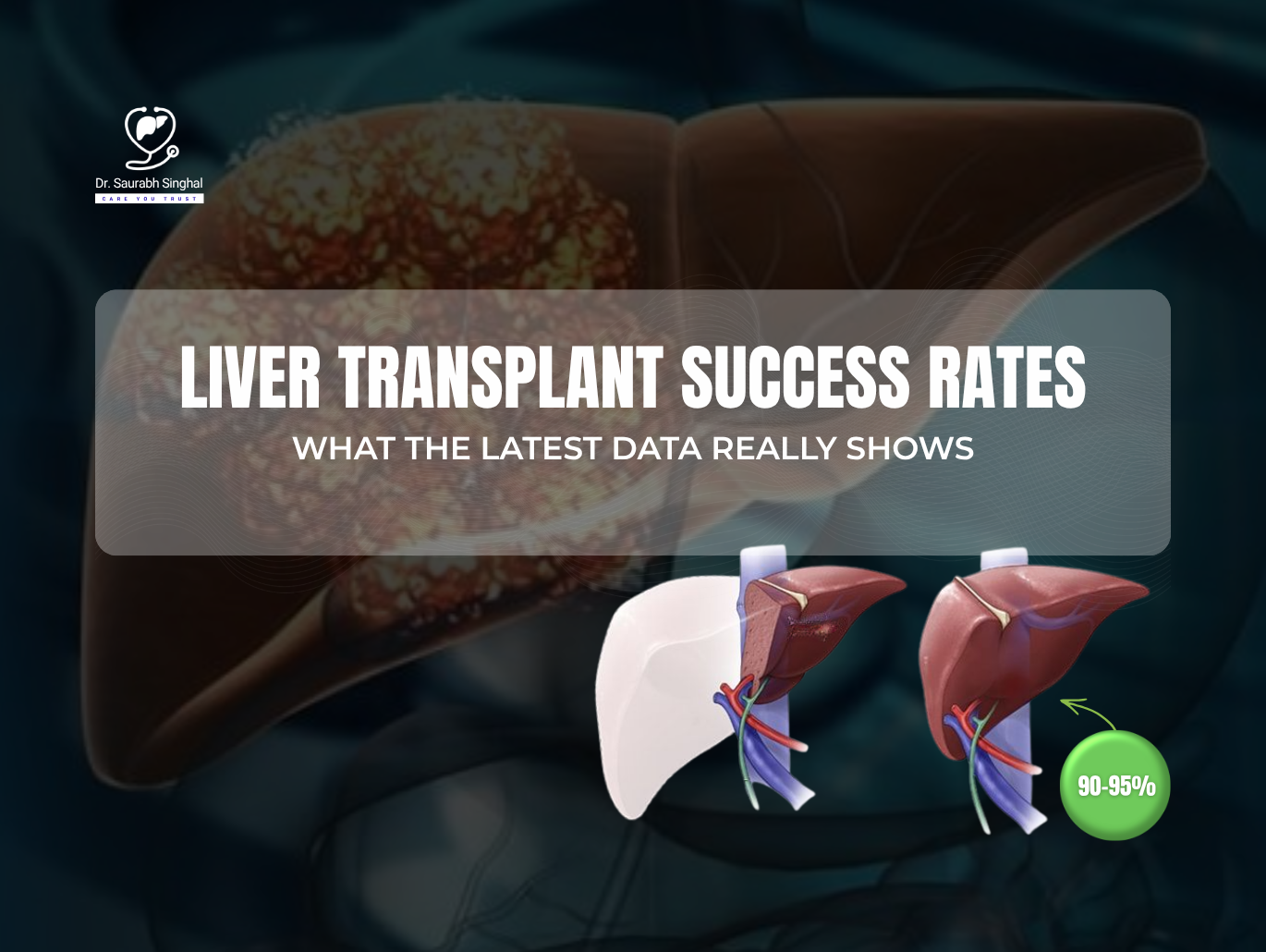
In 2025–2026, most experienced centres in India report 1-year survival rates between 85% and 90%, with many high-volume programmes touching 90–95% in carefully selected patients. The 5-year survival rate generally ranges between 70% and 80%. These numbers are now very close to the best centres in the world, thanks to better surgical techniques, improved medicines to prevent rejection, and stronger post-transplant care.
Common Myth: “Liver transplants don’t work well in India.”
This is simply not true anymore. India has become one of the leading countries for living-donor liver transplants, and the outcomes in top centres match or even exceed international standards. The key factors that improve success are early referral (before the patient becomes too sick), choosing an experienced team, and strict adherence to medicines and follow-up.
Another worry people have: “What if complications happen?”
Complications can occur — infections, rejection, or bile-duct issues — but today’s teams are far better at preventing and managing them. In high-volume centres that perform more than 50 transplants a year, the overall results are noticeably stronger because of the team’s experience.
Success also depends on the patient’s condition before surgery, age, and how well they follow the recovery plan after the operation. That’s why every case is different. But the overall message from the latest data is hopeful: for the majority of people who receive a timely transplant, life after surgery returns to a good quality — many patients go back to work, travel, and enjoy time with family.
When the liver condition reaches an advanced stage, timely expert evaluation can make all the difference. That’s where a well-established programme for liver transplant in Delhi becomes important — it offers access to experienced surgeons, advanced technology, and complete family support under one roof.
The bottom line? Don’t let fear or outdated information stop you from seeking the right guidance. The numbers today are on your side, and with the right team, a liver transplant is no longer just a last resort — it’s a proven second chance at life.
If you are considering a liver transplant in Delhi, consult Dr. Saurabh Singhal, Director & Head of the Centre for Liver-GI Diseases and Transplantation (CLDT) at Aakash Healthcare, Dwarka. With over 2200 successful transplants to his credit, he and his team are dedicated to guiding families every step of the way. 📞 Book an appointment today to understand how your family can prepare for this life-changing journey.