After a liver transplant, food becomes one of your most important medicines. The right diet helps the new liver heal, prevents infections, controls weight, and keeps medicines working well. Many families feel confused about what to eat and what to strictly avoid. Here’s a simple and practical guide to make it easier.
In the first few weeks after surgery, the focus is on light, easy-to-digest meals. Small frequent meals are better than large ones. The doctor and dietitian usually give a personalised plan, but there are some common rules almost everyone follows.
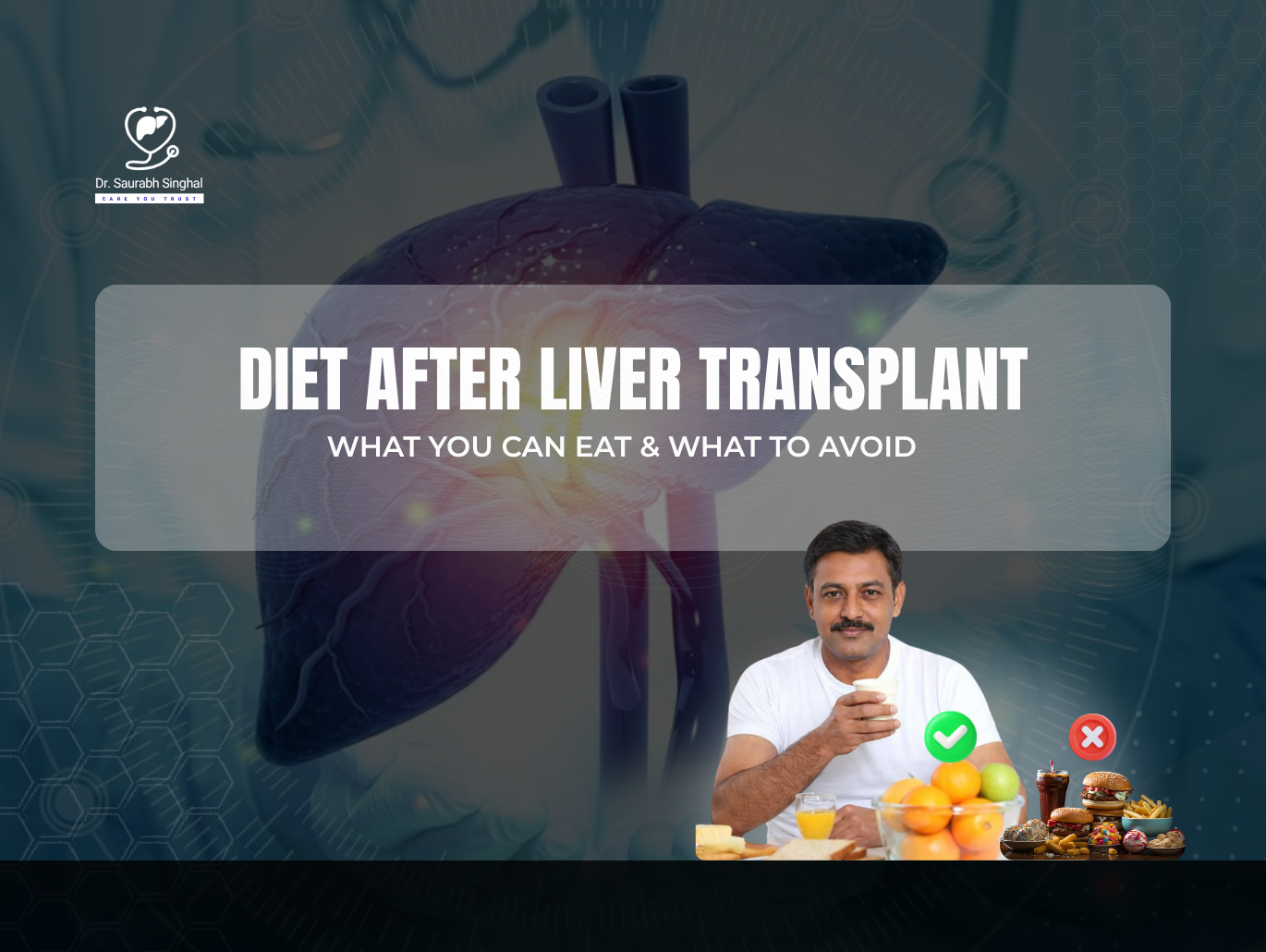
What you CAN eat:
- Fresh fruits (except grapefruit and pomegranate in the beginning because they can interfere with medicines)
- Vegetables, especially leafy greens and cooked vegetables
- Lean protein like chicken, fish, egg whites, and pulses
- Whole grains like rice, roti, oats, and quinoa
- Low-fat dairy or curd
- Plenty of fluids — water, coconut water, and herbal teas
What you should AVOID:
- Raw or undercooked food (to prevent infections)
- Grapefruit, pomegranate, and Seville oranges
- High-sodium (salty) foods and processed snacks
- Sugary drinks, sweets, and packaged juices
- Alcohol — completely and forever
- Unpasteurised milk or juices
As months pass, the diet slowly becomes more flexible, but healthy eating remains lifelong. Most patients are encouraged to maintain a balanced plate: half vegetables, one-fourth protein, and one-fourth grains. Weight management is important because some medicines can cause weight gain.
Eating at home is safest. When eating out, choose freshly cooked, hygienic places and avoid street food. Washing fruits and vegetables properly is a must. Many patients also start enjoying cooking again once they feel energetic — it becomes a positive part of the new lifestyle.
In the middle of learning all these new food rules, families often feel relieved when they see how much better the patient feels with the right diet. Good nutrition not only supports the new liver but also improves energy levels and mood. That’s why a complete care programme for liver transplant in Delhi always includes detailed dietary guidance from the beginning.
The most important thing to remember is that small consistent changes work better than strict rules. Celebrate small wins — like cooking a healthy meal together or enjoying a favourite fruit again. With time, eating healthy after transplant becomes a natural and enjoyable habit.
If you are considering a liver transplant in Delhi, consult Dr. Saurabh Singhal, Director & Head of the Centre for Liver-GI Diseases and Transplantation (CLDT) at Aakash Healthcare, Dwarka. With over 2200 successful transplants to his credit, he and his team are dedicated to guiding families every step of the way. 📞 Book an appointment today to understand how your family can prepare for this life-changing journey.